


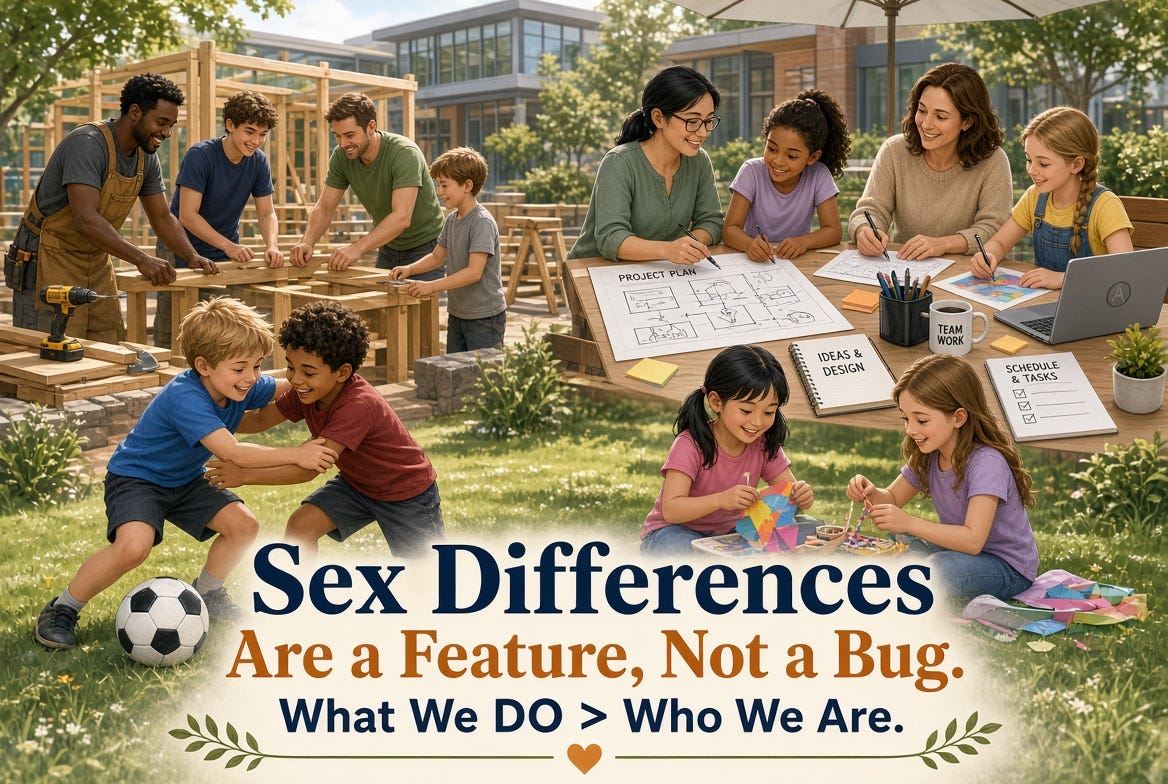
The following article by Michael Gurian is a companion piece to his post a few weeks ago, Our Fear of Helping Boys Thrive. This latest piece goes deeper by addressing the ways social anxiety is amplified and how it can keep us from helping boys, girls, men, women, and families thrive.
Michael’s writing can be found at michaelgurian.substack.com and his training team’s work in schools and communities can be found at the Gurian Institute.
Your Voices Speak on Cancel Culture and Boys’ Development: Four Truths from Citizen Science
by Michael Gurian
On November 5, I published an essay about my cancellation at one school. You can read it here: https://michaelgurian.substack.com/publish/posts/detail/221511293?referrer=%2Fpublish%2Fposts%2Fpublished.
As I noted, I did not tell this story to condemn the school (it is a quality school) but to point out flaws in our social institutions that we must deal with as a post-modern society if we are to help boys thrive. I suggested that overuse of “triggering” and “traumatized” by a few people in a community to end science-based (non-ideological) training on boys’ development is an indication of issues that our institutions must deal with. These issues include avoidance, denial, false ideas about males, and more.

I mentioned Boys, A Rescue Plan (2025) by Sean Kullman and myself, in which we analyze misandry (dislike of males) and androphobia (fear of males) that often take over a digital or human space without people realizing it, making healthy male development a marginalized topic in social institutions. Most often, people who fear and dislike males use “social constructs theory” (“masculinity is the problem”) to surreptitiously or obviously scold, shame, and attack male development. Boys, men, and males become, for these people, a negatively charged identity group for whom the end of manhood would be welcome.
Our Present Social Avoidance of Male Developmental Science
Many of you responded to my essay in emails, posts, in texts, (in one case, by mail!) and talking together on the phone and in person. Your wisdom as citizen scientists comes through strongly and your words point out important truths in our common human quest to care equally for all human beings. I will analyze four of these truths in today’s essay with reference to my own and others’ books as scientific underpinnings. Then I will publish some of your supportive and elucidating responses.
First Truth: Respect for Sex Difference Not False Sameness Leads to Women’s Equality
As many of you suggested, if we list things women/girls do better than men/boys in the aggregate (and there are many) and simultaneously list things men/boys do better than women/girls in the aggregate (and there are many) we would reach gender equality. Over the last fifty years, thousands of clinical studies have done just that, collected in some of my books (Boys and Girls Learn Differently 2011, Saving Our Sons, 2017, The Minds of Girls, 2018, Boys, A Rescue Plan, 2025) and others as well, such as Steve Stewart-Williams’ recent A Billion Years of Sex Differences (2026). In these lists are many things that women and men, and girls and boys, do equally well.
An example of clinical research on equalizing sex differences appears in studies of marriages between women and men (What Could He Be Thinking? 2003, Lessons of Lifelong Intimacy, 2016, Louann Brizendine’s The Female Brain, 2007, and many others). They connect our human access to the Petrie dish of married and couple love with male/female data from brain scans to show that long term marriage works because couples assimilate “complementarity of differences” into their daily work priorities, individual actions, mentoring pursuits, parenting styles, love-making and sex specific languages for loving and being loved. As citizen scientists, study your own parent-child relationships, friendships, neighborhoods, and love relationships for things you do together and what you do when acting independently to discover profound respect for neurobiological sex differences.
Corporations also survive and thrive based in systemic use of the complementarity of sex difference to combine the best neurobiological assets of women and men on a project-by-project basis. For example, men are driven by higher testosterone levels in blood and brain, as well as less frontal lobe interference with cerebellum-based activity, to comprise most of the workers who climb 80 stories up the skyscraper to get the city built. Meanwhile, women likely make up more of the engineering company’s bookkeeping, administrative, and/or public relations departments as they utilize less testosterone and more oxytocin (bonding chemical) for their daily work, and more frontal lobe decision-making to avoid the danger of the 80-story climb (Leadership and the Sexes, 2008, David Geary’s Male, Female: The Evolution of Sex Differences, 2020).
Neither his-job nor her-job is inferior nor superior; they are complementary jobs from which the whole corporation, all its women and men, gain sustenance via wages paid to them and via a sense of meaning derived by each as they do the work to which they are called. Were a false sameness be imposed on this corporation (an edict forcing the company to find 50% women high-climbers), the company would go bankrupt; not enough women would sign up to climb the high towers, and, most likely, not enough men would sign up to do jobs more women might prefer. The false search for gender sameness in each job would be the end of the company.
Is there a woman in the world who climbs 80 stories to lay iron and concrete? Of course. Do men work in PR and administrative departments in engineering firms? Of course. Science regarding the neurobiology of sex difference is never zero sum because the human brain and the human body are organically and, thus, socially complex. Nonetheless, sex difference is part of human genetics and already shows up in utero in MRI scans of near-term fetuses gestating in the womb (Boys, A Rescue Plan, 2025). If we impose false sameness on our sexes and society, we develop significant social problems in mental and physical health care and fail to deploy success models necessary to the longevity of couples, the health of parents and children, the success of schools, and the survival of businesses. Ultimately, sex difference is a huge evolutionary boon.
Second Truth: “What We Do” Is Often More Important than “Who We Are”
In establishing the first truth, why list what women and men ‘do’ rather than list who women and men ‘are’? Since our present culture is concerned greatly with “identity,” and has been since second wave feminism gained its power in the Big Three (academics, government, media) fifty years ago, are we off base in not leading with “identity”—with “who we are”—to focus on neurological sex-based human differences that appear in our actions?
No, we are not off base, because human beings, from an evolutionary perspective, judge one another mainly on what we do, not mainly on “social identity.” While we cannot know, in an instant, “who” the hundreds of people around us are, we can see what they do—how their actions influence, touch, help, or hurt us. In fact, from an evolutionary perspective, “who people are” is revealed, even proven, in what people do rather than in our own projections of identity onto people.
If you think about trauma and crisis for a moment, this will ring true. When you are in crisis, other people ask, compassionately, “What can I do?” People offer human strength in crisis even when just sitting and listening to the story of the crisis—even this listening is a compassionate “doing.” Someone in trauma or crisis can’t wonder over “who a person is” because trauma requires action from others; crisis requires us to prove who we are by what we do.
Are “identity” and “social identity” important to human society? Of course they are in many situations, but over-emphasis of “identity” as our most important marker hinders our ability to move toward critical evolutionary actions in communities (The Wonder of Boys, 1996, Wonder of Girls, 2002). In the school at which I was cancelled, projections about “social identity” and “gender identity” were a large part of why the teachers judged boys’ normal and everyday actions and behavior unfairly. People in the system judged male-normal behaviors against the backdrop of “masculine identity” they consciously or unconsciously projected onto males and then associated with male defect and danger.
Those teachers are not alone in focusing more on identity than actual normality of behavior. Especially in the wake of hyper-use of social media, don’t we all feel some pressure to focus on identity-based thinking, identity politics, and a single identity trait in people (sex, gender, race, ethnicity, victim, oppressor)? Simultaneously, don’t we also suspect, in our guts, that these same identity politics, and this hyper-identity focus are, often, not reflective of the complexity in real life?
Had all 100 of us been able to talk together in that training room (had the training not been cancelled) I think most of us would come to agreement that no human being can be defined by a single identity-trait; that we are too various for that kind of sociological reduction; that we are defined much better based on what we do, perform, achieve, ethically pursue, and, as a legacy, pass on to our offspring in remembered (or literal) currency.
Meanwhile, talking about “doing” does not mean that “being” is not important in a spiritual sense: Mindfulness and the solitude to “just be” are very important. Nor do your responses nor anything I am writing here suggest we should forget bad behavior among males or females. Anyone who acts in deleterious ways will garner reprimand and, as necessary, he or she will be ostracized and/or punished. But when normal male behavior in a school is considered unnecessary, shamed, and punished based on identity projections like “patriarchy,” “toxic masculinity,” or “masculine identity,” male/female difference, and real development of males as individuals, is forgotten.
In school settings, the ways that boys and girls learn differently are not understood, counted, and used in the system for successful practice. Many of the boys in that system become associated, politically, with negative identity and from there, they are hyper-corrected, shamed, opt out, suspended, fall behind, or fail.
Helpfully, just as academic culture is obsessed with “identities” that tear people apart, real people see differences in proclivities and assets as complementary and equalizing. Real people in real time, for the most part, are able to judge others on their normal actions to understand motivations and actions without projecting a defective identity.
In the case of boys and men, male aggressive play is not “masculine” disease; it is biological aggression nurturance (A Fine Young Man, 1998, The Purpose of Boys, 2008) and necessary in play patterns and relationships, from an evolutionary perspective, to help build up human resilience. Even accounting for mistakes among our males, we need both women and men, and girls and boys to do what they do if we are to survive and thrive as a species (The Good Son, 1999).
Third Truth: Second Wave Feminism Has Done Some Good, But Also Some Harm to Our Evolutionary Systems
In the 20th century, it became obvious that in the last three thousand years male social roles were of higher social value than female. First wave feminists showed humanity the unfairness of this power differential: Women and men were obviously different (with lots of overlap, too, of course,) but from Susan B. Anthony more than one hundred years ago up to Betty Friedan in the 1960s, the first modern women’s equality movement (the first wave I was raised in by my two feminist parents) helped women and girls (female) gain the respect that many men and boys (male) already had in social valuation. Profound social change in policy, law, work, and family occurred via this first wave; the value of female assets equal to male were revealed and strengthened.
Hoping to advance the cause of equality farther, a number of second wave feminists introduced two false principles: 1) that gender equality required the erasure of male/female difference, and that 2) males were, quite simply, bad people--inherently defective, frightening, enemies of females, oppressors, unnecessary, masculine enemies of a good society (The Wonder of Boys, 1996, Boys, A Rescue Plan 2025). To bring fairness based in sex, Title IX was passed into law right at the transition point between dominance of the first wave and the second. As Title IX later got interpreted by second wave feminists, “sex,” which implied difference, became a target for replacement by the more amorphous, undifferentiated, social identity of “gender.”
Third wave feminism came with people like Christina Hoff Sommers’ Freedom Feminism (and there are other waves as well) to push back, in part, on the two false premises of the second wave. New feminism argues that social identity is not more important than human nature, but the second wave feminist approach keeps significant control over the Big Three, thus our post-modern society, when issues of sex, gender, and, increasingly, race and ethnicity are discussed, including influence on a group of teachers in a training room. My work in that room and everywhere else fits better in first or third wave feminism than second wave, and, fortunately, most people in modern societies do not hold to the false premises of the second wave, just as most people in that training room did not appear to agree with the outrage among the smaller group.
Most people in the world, I suspect, adhere to principles of evolutionary psychology, which favors both female and male ways of doing and being, when they think about sex difference rather than second wave feminism because most people, consciously or unconsciously, live out their own realistic assessments of male/female complementarity (Nurture the Nature, 2006). Another reason might be: Parallel to second wave feminism’s control over much of academe, scientists Simon Baron-Cohen, Ruben and Raquel Gur, Louann Brizendine, David Geary and many others provided, and continue to provide, brain scans and neurological data so that our human population can observe neural motivations for what we do marked by evolutionary biology in sex-differentiation.
Anathema to much of the second wave, and anathema to the second wave’s false premises, neuroscience continues to shows sex difference throughout the lifespan via gene expression, brain function and structure, and physiologic development, differences that are important to mammalian and human thriving. That sex difference is good for us from an evolutionary viewpoint the second wave would like to be untrue, and some second wave feminist neuroscience writers go to great lengths to deny the foundational differences themselves. Unfortunately, denial leads to unnecessary difficulties in our systems.
When the few people in the training did what they did, they were revealing their submission to the two second wave concepts—that male/female difference doesn’t exist, and that, if it did, the males are wrong and bad anyway—concepts that harm more than the single evolutionary system of a school or organization but fan out throughout society to shame, punish, medicate, neglect, and abandon boys and, from there, promote the loss of males from each system’s healthy progress.
Fourth Truth: Healthy Evolutionary Systems Assume Our Resilience, Too, Not Just Our Fragility
Second wave feminism has many pluses, but also negatives, as we’ve noted. A hidden negative beyond negation of sex difference and hyper-emphasis on identity is male villain/female victim identities. As the second wave posits social identity as paramount and sex difference is denied into gender, the victim modality becomes the human default for women. This leads to an ongoing social regression that locks modern culture into a myopic view of the past and thus disallows crucial innovations in the present and future.
In the school, the “offended” group of teachers likely believed that fundamental male/female differences do not exist or, if they do, the differences inherently victimize girls and women. These dual beliefs were expressed in the small group “triggered” and “traumatized” by the video clip of males in aggressively healthy play patterns. As the teachers extrapolated, in their ideological thinking, that male play led to rape and violence (yes, some of them actually said this), they felt “harmed” and “victimized.”
No one was victimized, of course. Their own misandry (males are bad, defective, unnecessary) and androphobia (fear that males inherently victimize) are what triggered and traumatized them, not the video clip. But their extrapolation of victimization is a real phenomenon beyond this small group. Some men are villains and some women are victims in the real world (some women are villains, too, and some men are their victims). Bad things happen to us, especially when we are vulnerable, and it is logical, from an evolutionary standpoint, to try to remove stimuli from our environments that victimize us.
In this school, however, there was no victim, so, when the head of the school decided to cancel the training because a group of teachers were “traumatized” at being “victimized,” one basically healthy evolutionary system, this school, got hijacked not by real villains but by ideological pressure from the projected default of social identities—“male villain,” “female victim.” As this projection pushed the head of school to cancel the training, its group of adherents were doing something else subtle but worth looking at with clarity.
Though they were all adults, thus resilient enough to hear ideas they didn’t like, the group leveraged adult fragility as their group’s identity-defining foundation. They refused their own adult resilience. This became obvious as the group of teachers forced the head of school to shut down the conversation for their own “safety” as women from male bonding, the male brain, male development and, indeed, from me, a male. Operating here was an unconscious underpinning of fragility used for manipulative power that seemed righteous to them in part because they knew that their fragility would be assumed, even supported, by the school.
The head of the school could have said to them, “Okay, I hear you, but you are not the whole school just a small part of it,” and “I think we are all resilient enough to proceed forward with this training,” but he was confronted, in a few minutes, with people so invested in leveraging fragility through their outrage that he felt compelled to close down a training on important social issues in his system to protect this small group espousing fragility.
From an evolutionary viewpoint, to be prosocial is to be empathic, and to be empathic is to process fragility that might lead to suffering. Since everyone can be fragile at any given time, we respect fragility and respect our permeability as selves; we support one another when fragile, and we respect that we are all hard-wired for an internal journey between fragility, permeability, and resilience. But for most of human history, we raised our offspring toward resilience as the end goal. We taught each other how to sacrifice fragility when strength and resilience could be mustered. Because we raised our children this way, toward resilience, we assumed resilience in our adults.
Our post-modern culture still wants resilience from children and adults, but we have developed psychological theory, mainly championed in second wave feminist sociology, to assume universal female victimization. This ideology does not posit core resilience in children or even our adults; it posits fragility in ourselves and others, especially if we are or align with women, girls, gender exceptions, a race or ethnicity of color, or (at the other end of the political spectrum) with white people as fragile victims.
In this way of doing political and social discourse, even if people consider themselves resilient, they will likely assume fragility of the identity group for which they are advocating. This assumption might indeed be a correct assumption in individual cases, but just as with everything we human beings do, there are pluses and minuses to promoting that lie that all women are inherently fragile and men inherently villainous. While I think the general proliferation of the fragility assumption grew most profoundly from second wave feminism, others argue that it comes from excessive use of Marxism in social class and race debates. Whatever the source, when it comes to Sexgender, the world got divided into oppressors (male) and the oppressed (female) for political purposes. Our media and social media bought into this worldview, for the most part, which further proliferates it.
Now we must ask: Should we assume (even encourage) fragility in adults in our systems when those systems are safe in the real world? A school training environment is a safe environment. Most families, schools, mental health facilities, workplaces, neighborhoods, and relationships are safe. Because we are empathic people who want to help people around us to feel better when they are suffering, we might, at first, answer, “If a person says they feel unsafe, then that’s that.” Fair enough, but what if they are, in fact, safe while their “suffering,” including its background fragility, is being weaponized beyond its own psychological usefulness for social evolution?
What if the adult claiming fragility is not a victim but, instead, defaulting to “victim” for regressive purposes?
What if the adult is leveraging fragility as “a victim put in danger and experiencing trauma” only to banish from their evolutionary community ideas and people with which and whom they do not agree?
In these cases, should our empathy be with their overuse of victim or with the system that is trying to solve larger problems?
It seems to me (as it seemed to many of you who responded to my essay) that people using fragility for psycho-social profit are involved in narcissism without regard to the needs of others, including without regard to the need that the whole system—of which the person is only a small part—resiliently problem solve its issues. Some of you noted “ego-arrogance” in leveraging oneself as victim when one is not a victim. Others felt that assuming one’s own (and others’) fragility as the default is a form of infantilizing. This makes sense to me: there was the assumption that adults are still children, and not just children, but children being victimized as default.
Overall in social systems, if we will choose to assume resilience first, then fragility second, our systems will take a strong step toward fully equalizing the lives of women and men. We will stop treating women as inherently fragile and men as inherently evil. If, however, we pick fragility first and resilience as a distant second (or as impossible because victimization is constant by evil men), true equality in the evolution of human love and freedom will not occur.
Your Voices Speak
In providing your comments here as citizen scientists, I’ve cleaned up some grammar and punctuation for readability; added A/B italics to differentiate writers; and, because I received too many comments to print them all, curated somewhat. But I have also tried to leave your comments as close to their original as possible. In most cases, I have removed people’s names (and in many cases, no names were given) but in two cases, the writers indicated that they were comfortable with their names being used.
I really enjoyed being able to hear you speak about boys and girls and the brain differences at an ECEAP conference I attended a couple of years ago. Having raised three boys and three girls, I am aware of the differences. I had an educator give my 2nd grade son an in-class suspension for using his hands to throw webs (like Spiderman). Another teacher made a 4th grade son stay in from recess because he didn’t bring a coat. (He had a long-sleeved shirt and a hoodie... he runs hot and hates coats as do I). I had to go into the school and ask the teacher to NEVER do that again. In both cases, I reminded the teachers that boys need to run and play and pretend. My boys are in their 30’s now. Thank you for spending your life advocating for boys (and girls) in the best ways possible!
Michael, you wrote in your essay, “The teachers said I say, ‘boys will be boys’, which is a term I do not use…” This reminded me of growing up through the sixties and seventies when that phrase only ever meant that boys get grubby and skin their knees. It generally involved adolescent boys being boisterous. You wrote about males playing aggressively—‘They were involved in obvious male bonding, in aggression nurturance’—and this reminded me of where sports come from, aggression nurturance.”
Wow! Just….wow! This is the first actual account I have seen up close of this type of social and professional blackmail by educators of children in a professional development context. As a man, in his early fifties, I find this type of emotional blackmail in any learning environment bizarre. Even more bizarre that it is pandered to and therefore encouraged as a successful method of adult tantrum throwing. The principal, who is supposed to be a leader and the person with the ultimate authority for decision making, failed in his duty. He should never have appeased such nonsense and instead, should have addressed his staff after the break, brought out into the open the substance of the alleged grievance and explained why such nonsense would not be tolerated in his school. He should further have explained that the teachers were adults and if they were not of sufficiently robust character to digest ideas and concepts that were broader than their own narrow political ideology, then they should seriously consider whether they were emotionally equipped to fulfill their duties as an educator. The DEI coordinator should have been made to explain to the assembled group after the break what her concerns were and then the group given the opportunity to excuse themselves from the rest of the session if they felt they were too emotionally fragile to deal with the material. Leaders must never appease bullies and subordinates seeking to hijack the agenda. EVER!!
Thank you for your story. Somewhere else I heard you say something like this and I think it bears repeating: “The victim/trauma mentality, championed and mastered by feminism, flipped the script on evolutionary resilience, causing profound social issues in institutions and human relationships; now, evolutionary progress is tied, especially in female-male relationships, to teaching fragility first rather than resilience.” I agree with you. Each of us has to do some soul searching and become self-aware individually about whether we are infantilizing adults, even allowing their ego-narcissism, to control our systems. As a retired school superintendent, I resonate with what you are saying. Gurian Note: I referred to “second wave feminism” rather than “feminism” in the conversation she is referring to. As I wrote above, feminism as a whole has been an evolutionary boon, while one form of feminism has tended to cause regressive social issues.
Michael, as a men’s health educator, I have a men’s health program at MSU Denver where I teach Men’s Health, Men Across Cultures, Anger in Men, Fathers and Health and Aging Warriors. My program continues to be the ONLY men’s health academic program in existence, and I don’t wear that as a badge of honor but see it as affirmation of the fear of a focus on men and boys, despite the huge support that I get from curious, open-minded students, program managers, medical professionals, etc.
Bravo for discussing aggression nurturance, for expressions of the humanity, the compassion in men, that accompanies their fierceness, their aggression and fight for the common good. I have been teaching men’s health since 2005, and I attended one of your presentation/workshops in Denver so many years ago. Your blog post is evidence that our work is needed more than ever. Fierce appreciation, Dr. Steve Rissman, MSU Denver Men’s Health.
Thank you, Michael, for a very erudite, thought-provoking, and quite troubling read. I say troubling, because I recently retired feeling exhausted and exasperated with the psychologically fragile, wokeness of many of my former colleagues. I have been a teacher for over twenty years - mainly English as a second language. Seeing male students from many different countries and cultures, I noticed benign behavioral learning commonalities more specific to males which the inculcated woke won’t understand. I’m a passionate advocate for boys and men in this gynocentric (female-centered) era, so here are a few thoughts.
I’ve found that if certain male proclivities were not engaged in the classroom—if my teaching was done in a more gynocentric style—the boys and young men became disengaged and started to exhibit off task behavior which then disrupted everyone’s learning. I think one big thing that many teachers get wrong is they don’t understand the mode in which males bond by teasing one another. They freak out and start nagging and scolding to suppress it. Having been raised in a military background, I’m very used to this. It’s something Warren Farrell has often referred to as well. The idea is simply that boys and men tease each other as an unconscious search for weak spots in other males’ characters. Once they have found those areas of weakness, they don’t pile on - that’s bullying. However, then they do know each other’s strengths and weaknesses. They may thereafter take a dig occasionally to test for toughness but will back off if they get an anger (hurt) response. This is essential group knowledge for groups of males to best work together to defend the tribe and the territory. I do not know the deeper brain structure and science behind this. That’s not my area of expertise, but clearly a forte of yours, but once people get this idea, they can then set up little learning ‘bands’ or ‘gangs’ where boys are free to engage in this way, without anyone freaking out and claiming to be “triggered” and “traumatized”.
I’ve also found boys to be more engaged when activities involve more physical movement through use of puppets, drama and the impromptu manipulating of props such as small whiteboards, and extemporaneously used classroom objects to illustrate ideas. I call it “dynamic teaching.” Especially today with kids who are bombarded with dynamic digital imagery, I found that as the teacher I often became the ‘video’ on the ‘stage’, enacting the ‘story’ which explained the concepts. This was developed in South Korea with the first wave of student smart-phonitis. I once saw a Japanese female teacher using kabuki theater hand and facial gestures as she taught English to an ESL class and the students were literally spellbound and totally engrossed in the lesson.
I want to address your recent encounter with those teachers who cancelled your attempt to describe the differences in brain structures of boys and girls and how that difference impacts learning. I have followed your work for many years. You have always made it clear, boy-girl brain “difference” doesn’t mean “smarter”. It is an organic reality that impacts the way the sexes learn, and how those differences can be addressed in a school class. I’ve written articles about the boy-girl differences and its impact on behavior, including the fact that 90 percent of those residing in LA jails are males. A recent article was addressed to the LA Board of Supervisors recommending they establish an LA Men’s Commission to address the present disparity of successful outcomes between men and women.
https://medium.com/@josephcharney/opinion-time-for-an-la-county-mens-commission-eb7875cbe986
I’ve written other articles addressing the differences and needs of boys and girls, and how “modernity favors females”.
https://medium.com/@josephcharney/the-boy-disadvantage-and-the-mentoring-imperative-111a39433421
It is with this background and concern that I found the “cancellation” you described so appalling. While I understand it was the first time that this pushback was manifested with such hostility to you, I believe the response by these teachers represents the bias of a significant percentage of those who teach young boys. Years ago, I met with teacher representatives from our school district and requested they consider your work and recommendations. What I received back was ideologically driven book recommendations whose authors were unwilling to engage your findings. These ideological books were not persuasive.
While most who disagree with you choose to be less aggressive about it than they were in your recent story of cancellation, I believe that within many schools, the resistance to the scientific reality of boy-girl difference is still clouded by political correctness and misguided “feminism.” I could not help thinking of Galileo and his attempt to show members of the Church that his telescope revealed the Earth was not the center of the solar system. Notwithstanding the invention of the telescope shredding the myth of the Earth being the center of the solar system, Church fathers refused to use the new device to undermine their religious belief. They didn’t want to use the new tool at all. Fast-forward four hundred years. We now have the means that conclusively reveals how male and female brains are different, and the implications of that difference in the context of “how boys learn” and what we can do to help them learn.
How should we now confront those who choose to ignore science and the tools that reveal the truth about how best to teach boys? Should we be forced to accept an unwillingness to do so because of a political ideology? It took a significant historical struggle to overcome the lie that women are intellectually inferior. You have always stressed that we’re talking about “differences” in learning between girls and boys and you’ve never denigrated female potential and achievement. Those differences are now irrefutable, and those responsible for the education of our boys have a duty – yes duty, not an option - to study, recognize those differences, and consider them when adjusting curriculum to enhance successful male learning.
I’ve supported your efforts for years and have found you to be very patient with those who have disagreed with your findings. My strong conviction today is that we must not passively tolerate this ideologically driven ignorance while our boys are suffering the consequence of that ignorance. When I went to law school there were three women in my class. Now women make up 60 percent of the entering class in both medical and law schools. We should celebrate this. But what about the fact that 90 percent of LA’s jail inmates are males? What about the disproportionate male dropout rate from schools and the myriad other negative outcomes suffered by males that I described in my articles linked above?
Those of us who promote the health, education and behavior of boys must recognize that we are often up against mindless political correctness, and an anti-male faction disproportionately embedded in our public education system. While I believe most teachers accept the science of boy-girl difference, a very vocal element chooses not to.
I urge that in the future you call out publicly those who refuse to utilize modern scientific findings that are available to all. Those who teach our children must be required to look at brain scans as part of the educational curriculum and be willing to integrate this knowledge when creating curriculum for girls and boys. Those who choose to ignore your work, the science behind it, and your suggestions to incorporate this knowledge into the curriculum, are perpetuating boy failure. I respect your patience with those who ignore science. But I strongly believe the time has come to vigorously push back against ignorance promoted by ideology, not science: ignorance that impedes successful learning.
Every moment science is not integrated into the curriculum of teaching boys is an opportunity missed that may have a huge negative impact on the chances of male success. It’s time for no tolerance for an anti-science attitude in teaching boys. Every boy must receive the education that will ensure that he thrives. Sincerely, Joseph P. Charney.

Feminists use boys differences against them, boys have a lot of energy and feminist teachers keep break times short so that boys cant use up energy and it causes them a lack of concentration in class, this is only one tactic they use, Feminists are sexist pigs and liars, they are a hate movement and thiey are trying to destroy boys education.