


While many are courting men for elections, the 2026 midterms may not reveal anything new as we wait on the breakdown of results that could take a few more days or a few more weeks. Married Men and Married Women have voted Republican more than Democrat over the last several election cycles and the converse is true of Not-Married Men and Not-Married Women—who tend to vote Democrat.
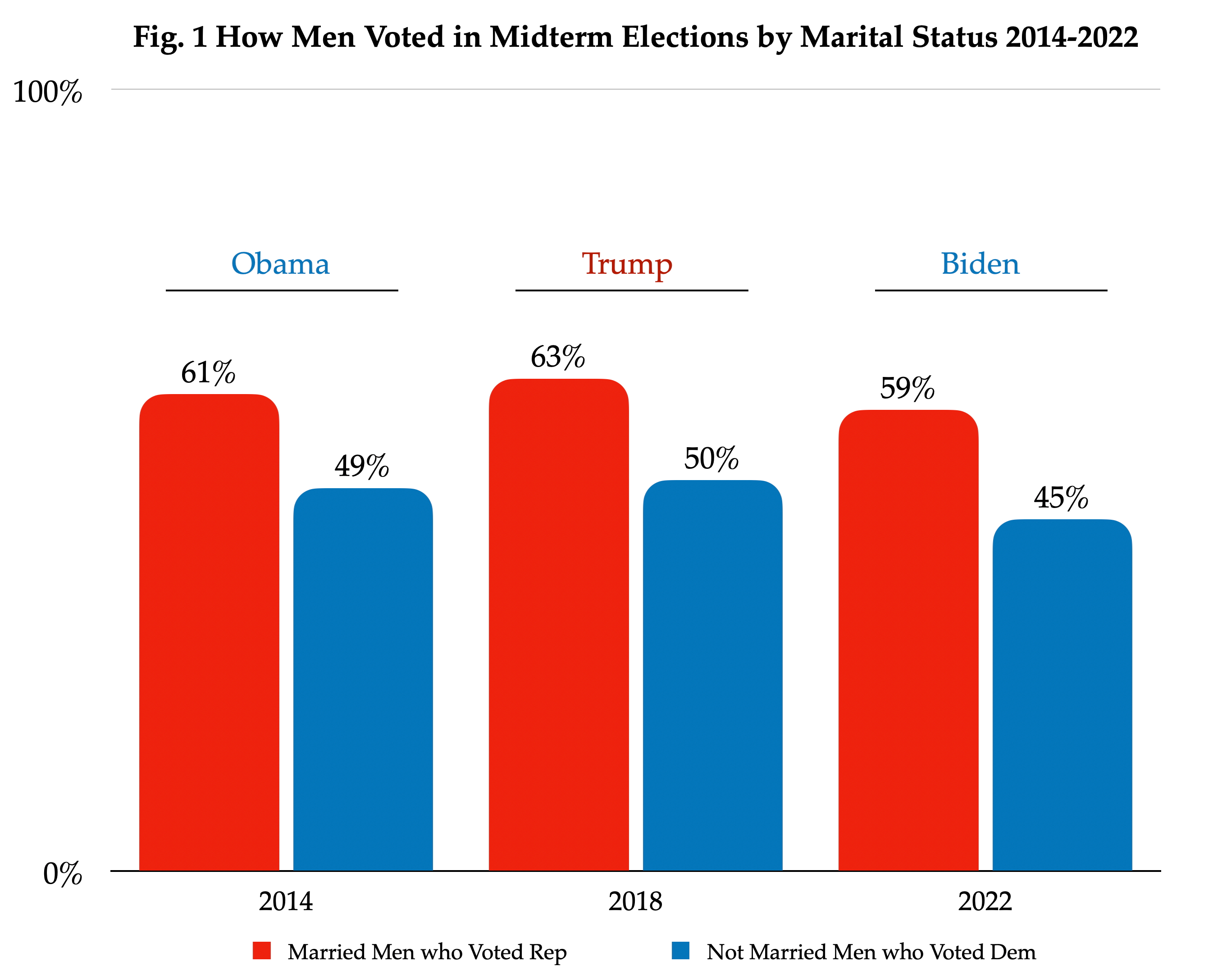
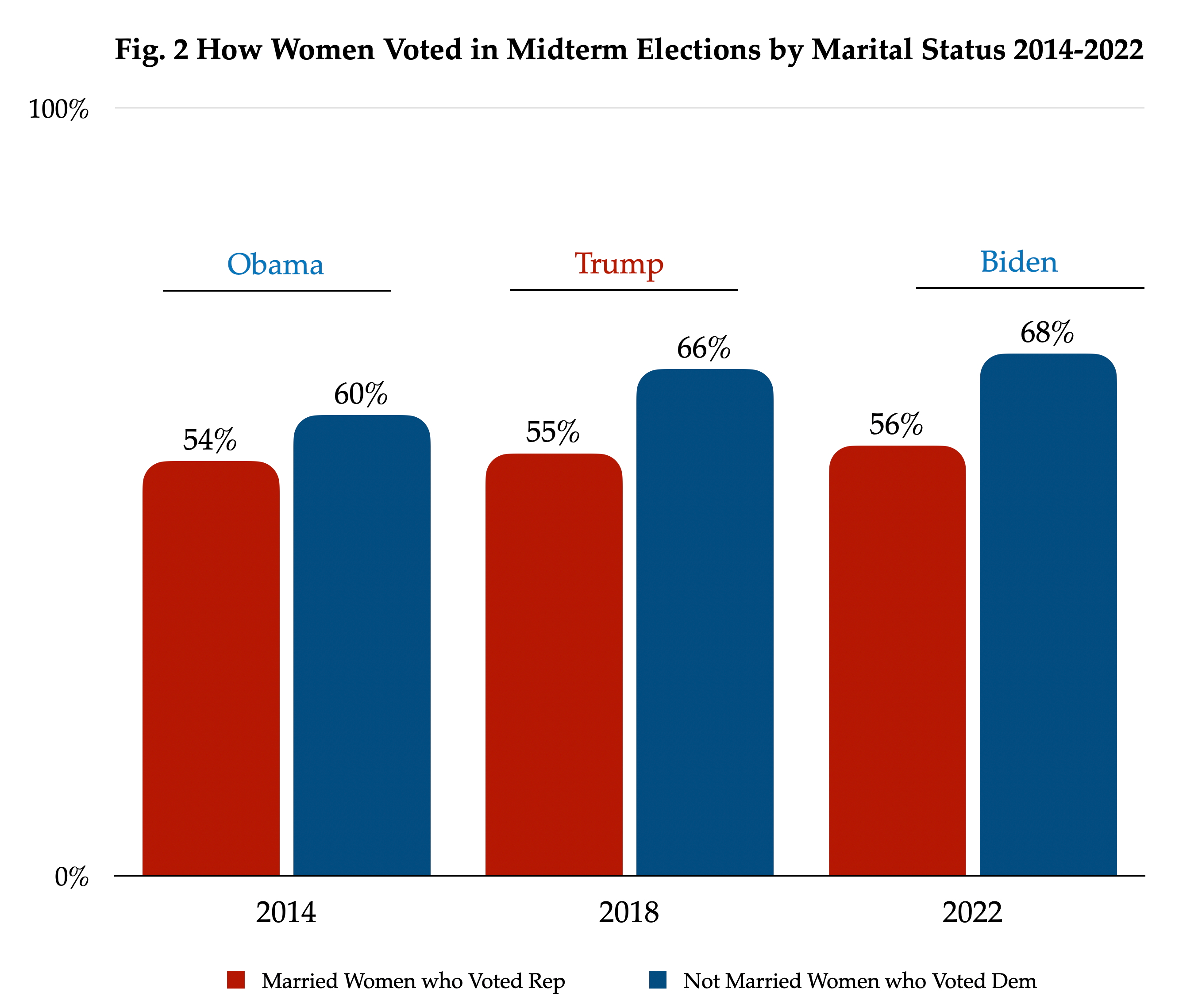
The major polls, CNN, New York Times, ABC, and others have largely ignored this demographic and may speak to where our contemporary institutions place their emphasis. Single women are the largest voting bloc for Democrats and married men are the largest voting bloc for Republicans, followed by married women who are more likely to vote Republican than single men.
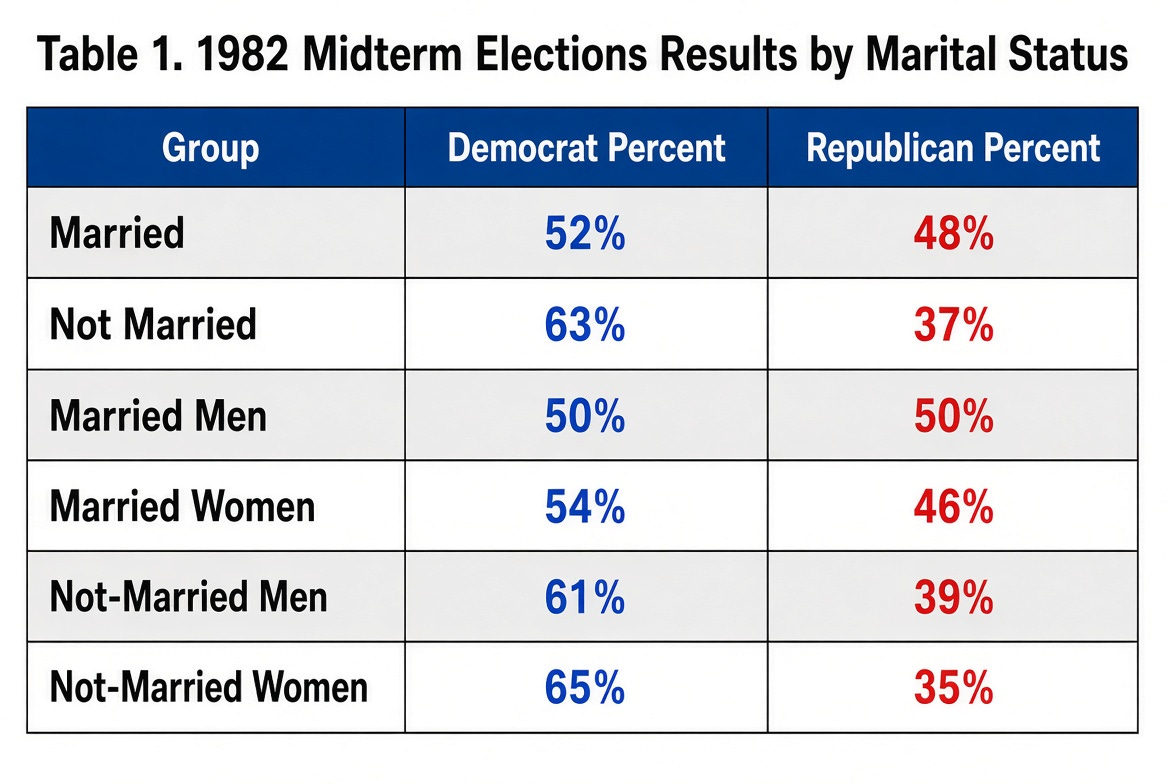
This was not always the case. In the 1982 midterms, married men and married women voted Democrat. It’s right to argue that Democrats placed a more direct emphasis on helping families in their 1980 platform.
“Government should not encourage the break-up of intact families. On the contrary, we must provide the help a family needs to survive a crisis together. In 1962, America took an action which has been one of the greatest contributors to family stability in the history of federal policy. For the first time, states were permitted to provide assistance to families with both parents, and still be eligible for general reimbursement. We reaffirm our support for the 1962 action and urge that states not providing assistance to unified families begin to do so. We must treat stable and broken families equally,” 1980 Democratic Party Platform.
While Democrats lost to Reagan in 1980 by a substantial margin, some of their rhetoric took hold in 1982 and may partly explain the shift in 1982. (There was no 1980 data available for this breakdown.)
The modern Democratic party seems fuzzy when it comes to the importance of family formation, and the polls from the institutions that lean left seem to readily sideline it. The data shows that single-parent homes face greater poverty, poorer physical & mental health issues, and poorer educational outcomes—see Boys, A Rescue Plan as well as the data below from the U.S. Census Bureau.
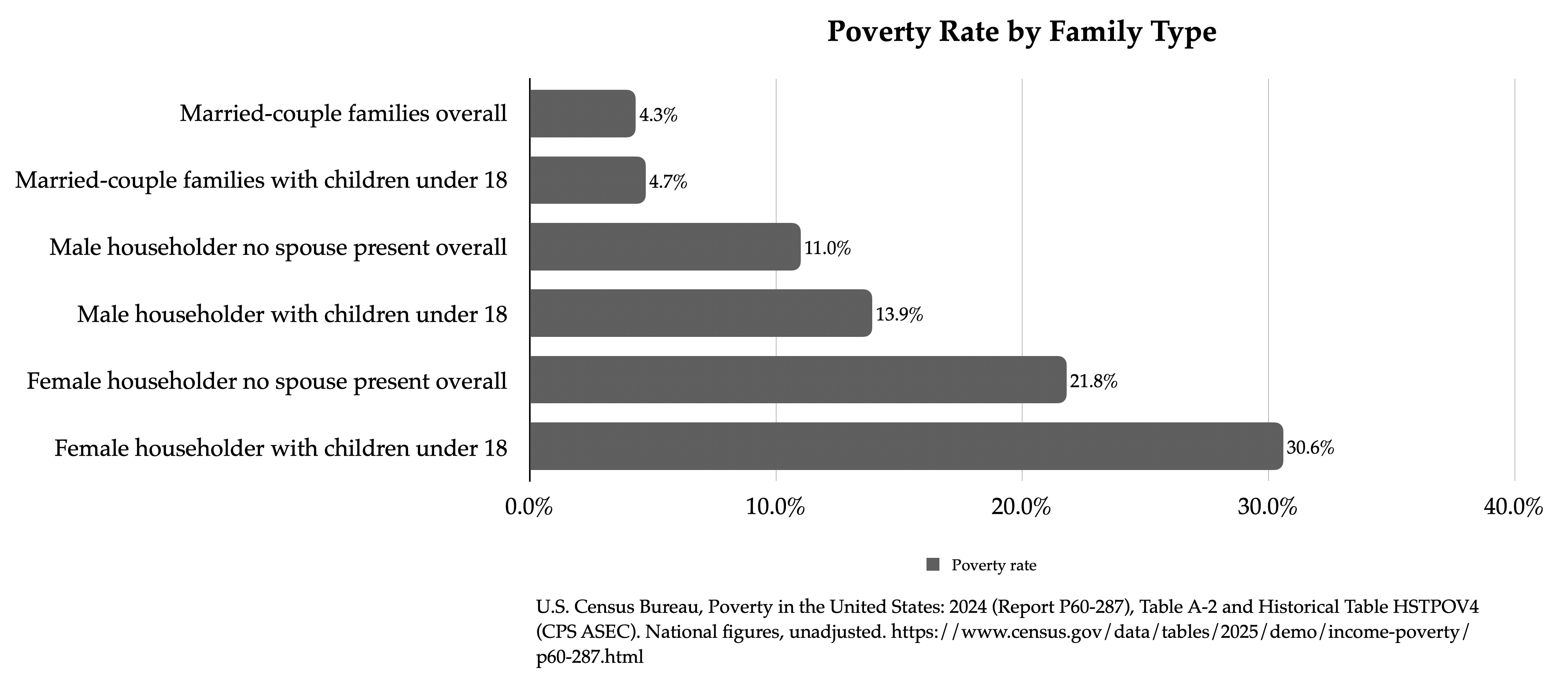
The shift in family structure has roots that go back further than current polling. The Great Society era coincided with, and contributed to, a sharp rise in non-marital births, first and most dramatically in the black community and later across other demographics. The groups most exposed to the negative effects of family breakdown are also the groups Democrats rely on most heavily at the ballot box, while the groups that still form and maintain stable families lean the other way.
When Government takes on the role of many family functions, critical developmental attachments are missed and—in many instances—at odds with family values. It can become a centralized family agency—a bureaucracy in place of family. Government plays some role in social support, but the parties behind it also play a part in garnering votes and administering to constituencies more than encouraging social expectation, family formation, and parental rights. For instance, allowing schools to have children socially transition without parental consent—something the majority of Democrats and Republicans oppose and an issue this new Congress will need to confront.
The data shows that many programs have minimal impact on family outcomes and the institutions of higher learning have all but abandoned more robust discussions on the importance of the nuclear family as critical to stable societies. While universities are prepared to demand a Diversity, Equity, and Inclusion or a Gender Studies course as part of graduation, a supplemental alternative to that narrative—like the significance of family formation for the social good—is ignored.
By treating the preferences and circumstances of married voters as secondary, Democrats are writing off a large, relatively stable bloc while amplifying the conditions that expand the opposing one. In doing so, absence becomes presence: the party more readily prioritizes talking points and programs over stimulating and encouraging the strongest institution in any society—the family.
Sources
National Election Pool. “2014 National Exit Poll.” Conducted by Edison Research, 4 Nov. 2014. CNN, www.cnn.com/election/2014/results/exit-polls.
Wilcox, Brad. “Mind the Marriage Gap: The 2014 Election Edition.” American Enterprise Institute, 6 Nov. 2014, www.aei.org/commentary/mind-marriage-gap-2014-election-edition/
American Enterprise Institute, 6 Nov. 2014, www.aei.org/articles/mind-marriage-gap-2014-election-edition/.National Election Pool.
“2018 National Exit Poll.” Conducted by Edison Research, 6 Nov. 2018. CNN, www.cnn.com/election/2018/exit-polls.
National Election Pool. “2022 National Exit Poll.” Conducted by Edison Research, 8 Nov. 2022. CNN, www.cnn.com/election/2022/exit-polls.
ABC News and The Washington Post. ABC News/Washington Post Election Exit Polls, 1982. Conducted by Chilton Research Services, Inter-university Consortium for Political and Social Research, 1982, https://doi.org/10.3886/ICPSR08120.
CBS News/New York Times Election Day Surveys, 1982. Inter-university Consortium for Political and Social Research, 1982, https://doi.org/10.3886/ICPSR08168.v2.