


Protests erupted on the Cornell campus in defense of Jane Doe, the alias of the woman currently suing Cornell, Chi Phi, Delta Delta Delta, a bar and others for events on a night in October of 2024. (I wrote about this in my last article.)
These legal pathways are certainly within her rights, as are civil protests on college campuses. Free speech, however, does not include a right to destroy property or ordinary business. Disorderly conduct, trespass, criminal mischief, and unlawful assembly remain crimes.
I sent an email to the Cornell Media Relations Department and asked the following: “Property owners can seek an injunction or damages for interference with their operations and for property destruction. Will Cornell sue students who have damaged property on the Cornell Campus or disrupted business operations?” (I will update this post if I receive a reply.)
The protests, however, are prematurely assigning guilt before and we must ask: do the accuser and the accused deserve due process? May each use the courts if that right, or a fair hearing, has been denied or compromised?
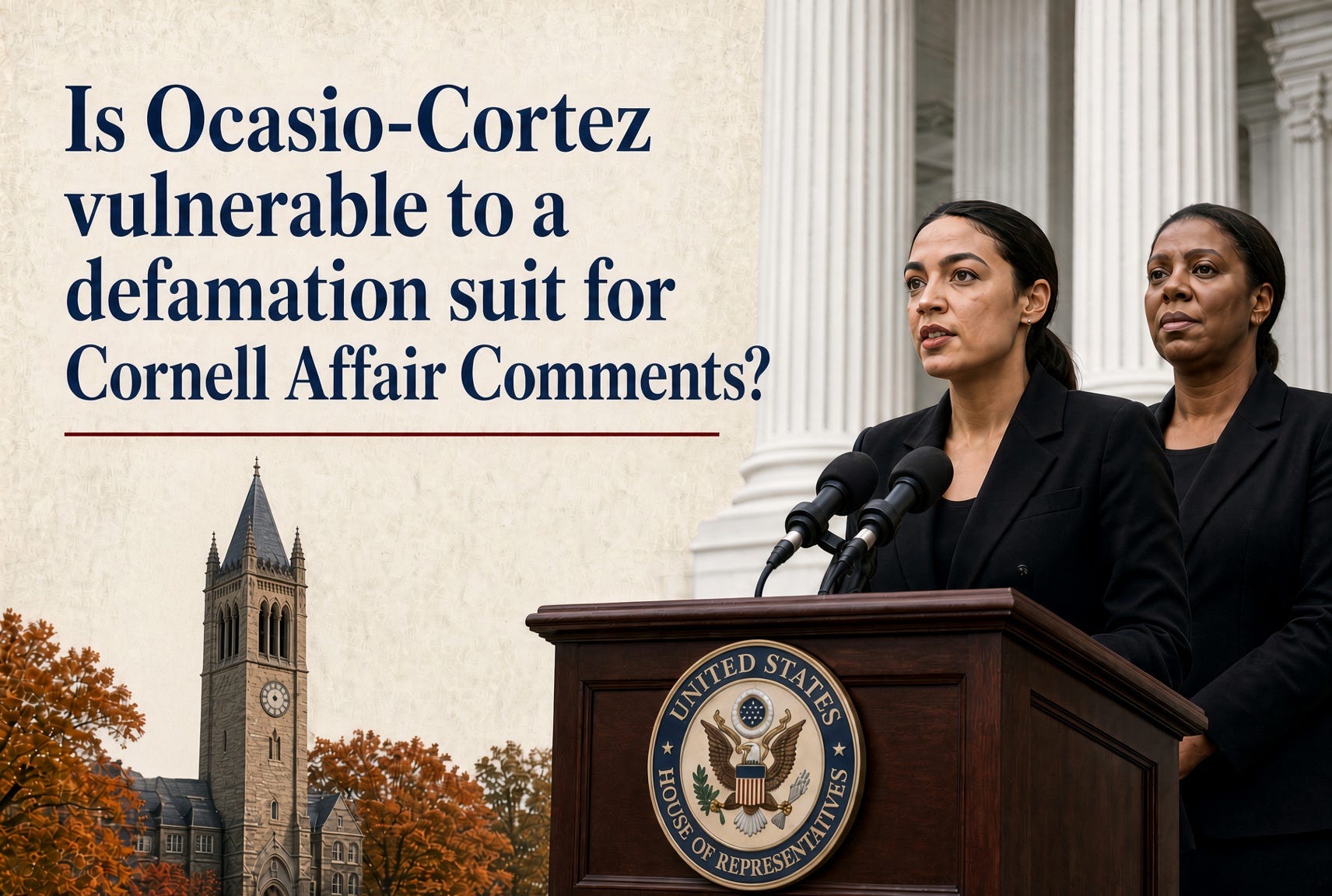
At the More Perfect University’s Students vs Billionaires Town Hall on September 27, Representative Ocasio-Cortez of New York discussed the Cornell Affair. From approximately 37:30–43:30 into the speech, Rep. Ocasio-Cortez paused to address the audience about the Cornell Affair:
“I want to address one of the most pressing issues that we have seen come out of Ithaca just this past week, which is the news coming out of Cornell University about what they did regarding a Jane Doe….It has just been revealed that in 2024, just about two years ago, seven men drugged and gang raped a 20 year old woman. They lured her into a fraternity house, they drugged her with ketamine, they then posted to a group chat that she was incapacitated and seven men took turns gang raping her for seven hours….”
The Cornell Affair has since escalated, and many people have taken one side or the other. It is fair to argue that Representative Ocasio-Cortez has made a claim that may violate defamation laws in New York state, and that her remarks helped amplify protests. A case against the congresswoman would have to prove actual malice: knowledge that the statements she made were false, or reckless disregard for whether they were false. The congresswoman could argue that she is a public official speaking on a public matter and that her speech is protected. She cannot argue she is immune from a defamation action.
The congresswoman admitted that she “read about what happened at Cornell,” but what she read is unclear. A case against her would require a subpoena of records she and her staff received, notes about her speech, and what she did and did not know prior to speaking. Did she know, for instance, that there were conflicting reports? Did she know that some of the men said they were not involved in any of the acts?
Had the congresswoman simply stated that seven men have been accused, not convicted, her words would have been accurate. The congresswoman could still have used an emotional appeal, and even pressed a questionable narrative about patriarchal structures. The decision to assign guilt seems more intentional than something born of ignorance or simply not knowing.
One day later, New York Attorney General Letitia James posted the following comment about the plaintiff in the case. Four days after that post, Governor Kathy Hochul appointed her special prosecutor.
“What this young woman has been forced to endure is horrific and unacceptable.
I’m holding her in my heart and in my prayers.
To her, and to all survivors: you’re not alone.
We stand with you.”


The attorney general’s words treat the allegations as settled fact, with phrases like “forced to endure,” “horrific,” and “unacceptable.” Ms. James uses the words of an activist, not the words of an impartial prosecutor—which makes Governor Hochul’s decision to name her special prosecutor questionable.
Hochul, too, appears to have taken a side instead of assuming a more objective posture. In a press release, Hochul stated:
“The allegations in this case are nothing short of horrifying. For any student to come forward after an experience like this takes extraordinary courage. No student should ever be left wondering whether the institutions meant to protect them will listen and act.”
“I support the district attorney’s decision to reopen the criminal investigation. But there are also serious questions about Cornell’s campus culture and its systems for prevention, reporting, and response. That is why I am calling for outside counsel to conduct a transparent, independent review of the university’s response to determine whether Cornell met every obligation to protect its students and pursue justice.”
On October 2, the Governor intensified her claims:
And according to new reports, she could not have been clearer that she was 100% confident that she had been raped. Yet, shockingly, those words never made it into the account that the Cornell police sent to prosecutors. The [District Attorney] then declined to pursue charges after reviewing that incomplete account and never interviewing her. Think about that — in what world would the police learn from a victim that she'd been literally gang raped while intoxicated by five men in a fraternity house and not elevate those allegations to the District Attorney? In what world does the District Attorney not even interview her or anyone else involved, or even request the full transcript? (Bold my emphasis).
“This woman, this young woman, had already endured something that is utterly unspeakable and then at every turn, she was failed by people and institutions with an obligation to protect her…. (From 26:27 forward).
Ocasio-Cortez and Hochul assign guilt to a whole host of entities without any consideration for the defendants in this case who deserve equal protections.
Elected officials are taking on protestor roles. They are stating foregone conclusions at the expense of due process. These comments may warrant a defamation claim against Representative Ocasio-Cortez. They may also warrant a petition calling on Attorney General Letitia James to recuse herself from the Cornell Affair.
Pretrial comments from a congresswoman, the attorney general of New York, and the governor of New York can prejudice a jury pool. Their characterizations of the Cornell Affair leave a lingering question: Have Ocasio-Cortez, Letitia James, and Kathy Hochul already put their hands on the scales of justice?
If anyone is found guilty or not guilty, it should be on the merits of the case—not on some form of emotional appeal that makes a fair trial in New York seem almost impossible. However, it does make good press weeks before an election.
Thanks, Sean. She sure is vulnerable to being sued for defamation. Maybe they can also get her for inciting riots on the campus.